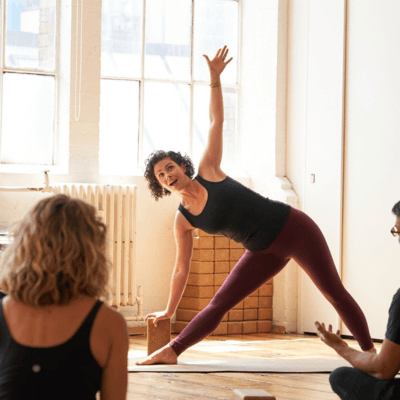
A new way to slow down.
Louise Brown has spent ten years teaching yoga across London, with a background spanning Vinyasa, Hatha, Rocket, Mandala, and Yin, as well as pre and postnatal work. In recent years, her focus has shifted towards sound healing, somatic embodiment and nervous system care – a journey that’s led to the development of The Ground of Being: Somatic Yin Yoga – available to experience as either a 2hr Workshop or 50hr Training. We sat down with Louise to talk about what Somatic Yin actually is, why she built this course the way she did, and what she hopes trainees will walk away with.
1. You’ve trained across so many styles over the years, Vinyasa, Hatha, Rocket, Yin, pre and postnatal. What drew you specifically towards Somatic Yin?
It’s been a really interesting journey, and one I hope truly never ends. My first 200hr Yoga teacher training over a decade ago specialised in Hatha Yoga and a lot of the Yin yoga practice is originally inspired and informed by the traditional 15 poses from the Hatha Yoga Pradapika including Shoelace (Gomukasana), Caterpillar (Paschimottonasana), Seated twist (Matsyendrasana), Butterfly (Bhadrasana) Dragonfly (adaption from Koormasana), Sage’s pose (Virasana) & of course the most important Savasana. Teaching and practicing Yin has always felt like a homecoming to my own origins and roots as well as the rich roots of the practice. Honoring lineages and coming home to ourselves over and over again.
The word Soma appears in ancient texts like the Rigveda, Atharva veda, and Ayurveda, where it is often associated with tranquillity, elixir, and ambrosia. In these sacred texts, Soma is depicted as a divine, life-enhancer that plays a significant role in rituals and spiritual practices. In the Vedic tradition, Soma (Sanskrit: सोम, sóma) is described primarily as a drink that holds immense importance in both physical and spiritual realms. The Rigveda specifically mentions Soma in the Soma Mandala, where it is revered as a powerful drink that is said to confer immortality, strength, and divine favor.
In Ayurveda, Soma is closely linked with healing and vitality. It is considered an elixir of life, often symbolizing the moon or the divine nectar that nourishes both body and mind. Soma represents the subtle energy that sustains life, balancing the elements within the body, and promoting longevity, peace, and mental clarity. The traditions and lineage of this practice and has been at the heart of everything I have practiced and taught throughout different styles that have shaped my teachings.
Whilst the word ‘Somatic’ actually derives from the Greek ‘sōma’ meaning body, I like to think of Somatic Yin as something that really marries both meanings of the word. Soma can be thought of as both the divine and life-enhancing elixir as well as the body which can carry it – a vessel for the divine.
2. You recently completed MyoYin training with Jo Phee, and trauma-informed yoga and social justice training with Susanna Barkataki. How did those experiences shape this course?
I think particularly at the moment there is a real disconnect with how to exist within the world of Yoga and the world as a whole. My year long training with Susanna Barkataki was incredibly rich and inspiring and truly gave me the confidence to embody yoga’s roots and the tools to lead from a somatic approach and respond with care to community spaces. I always aim to learn as close to lineage as possible and Jo Phee is one of Paul Grilleys (the creator of Yin yoga as we know it now) senior teachers.
She has a specialist approach to fascia and has spent many years studying with world leading experts. Being able to study the spiritual lineage of Yoga through somatics and nervous system care with Susanna whilst also the scientific side of fascia and cadavers at King’s college with Jo gave me such depth and a broad range of perspectives to shape and develop this course and I am honoured to bring it together with my expert guides Ali Bolton and Saskia Hawkins alongside.
3. What’s the real difference between a typical Yin class and a Somatic Yin approach?
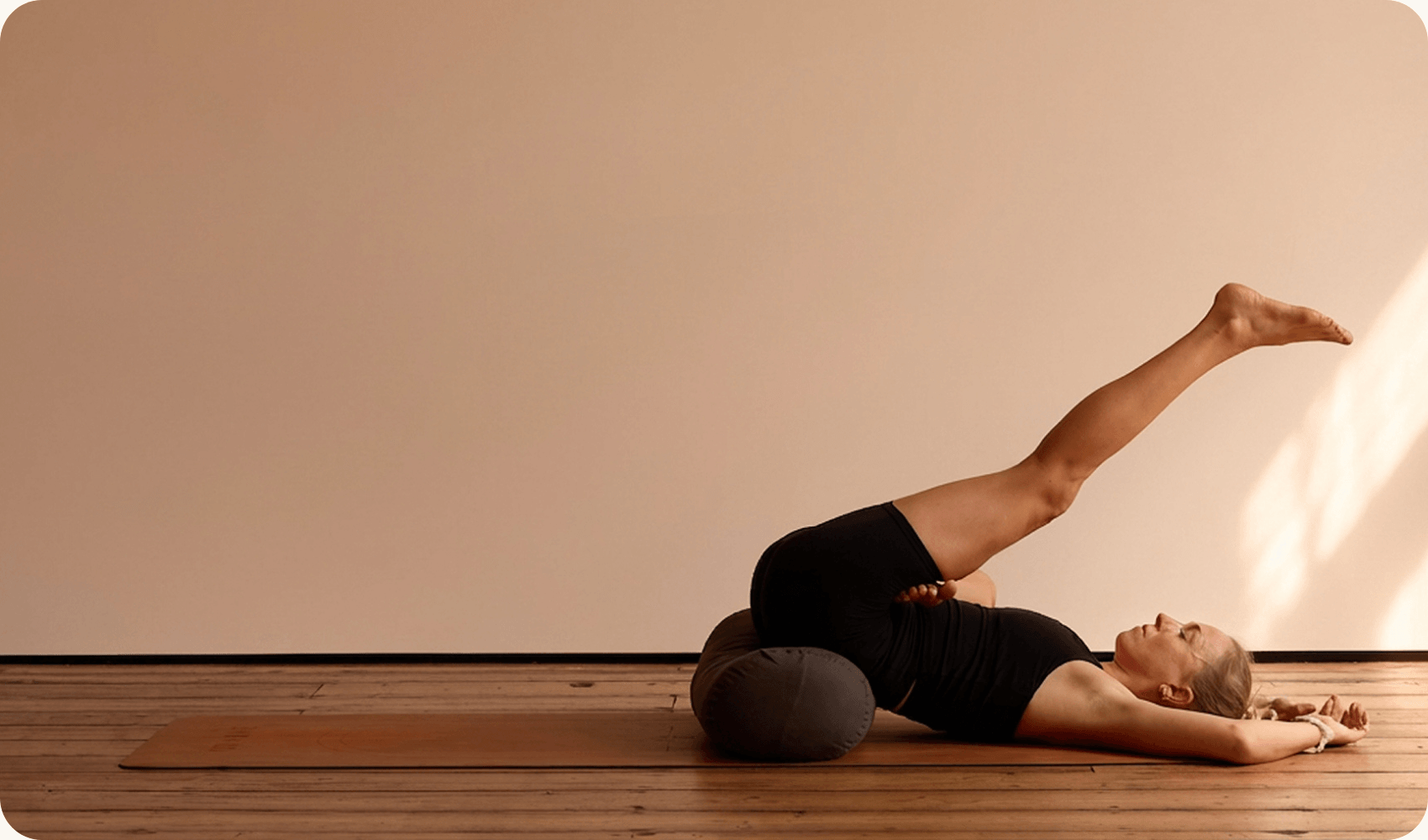
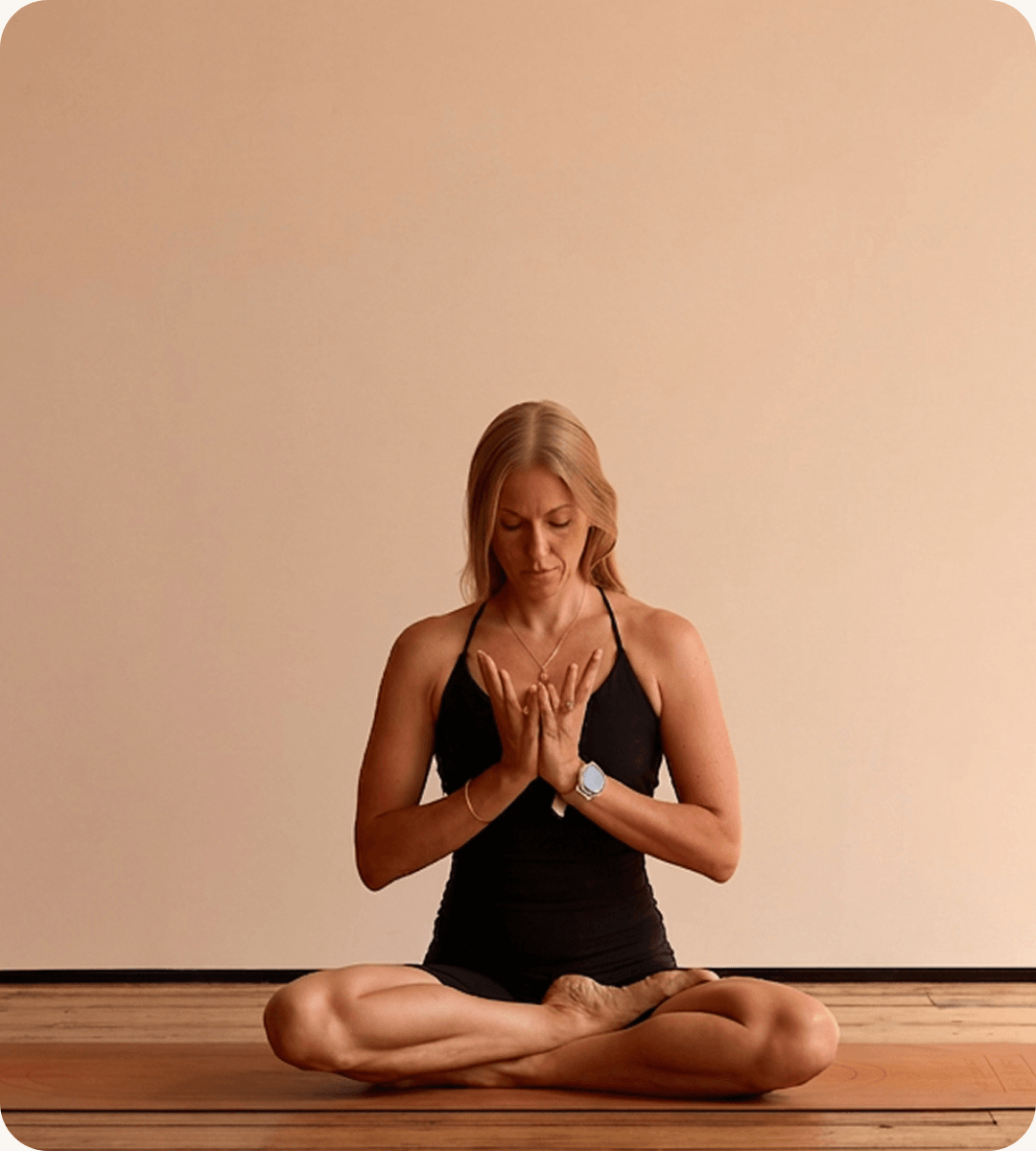
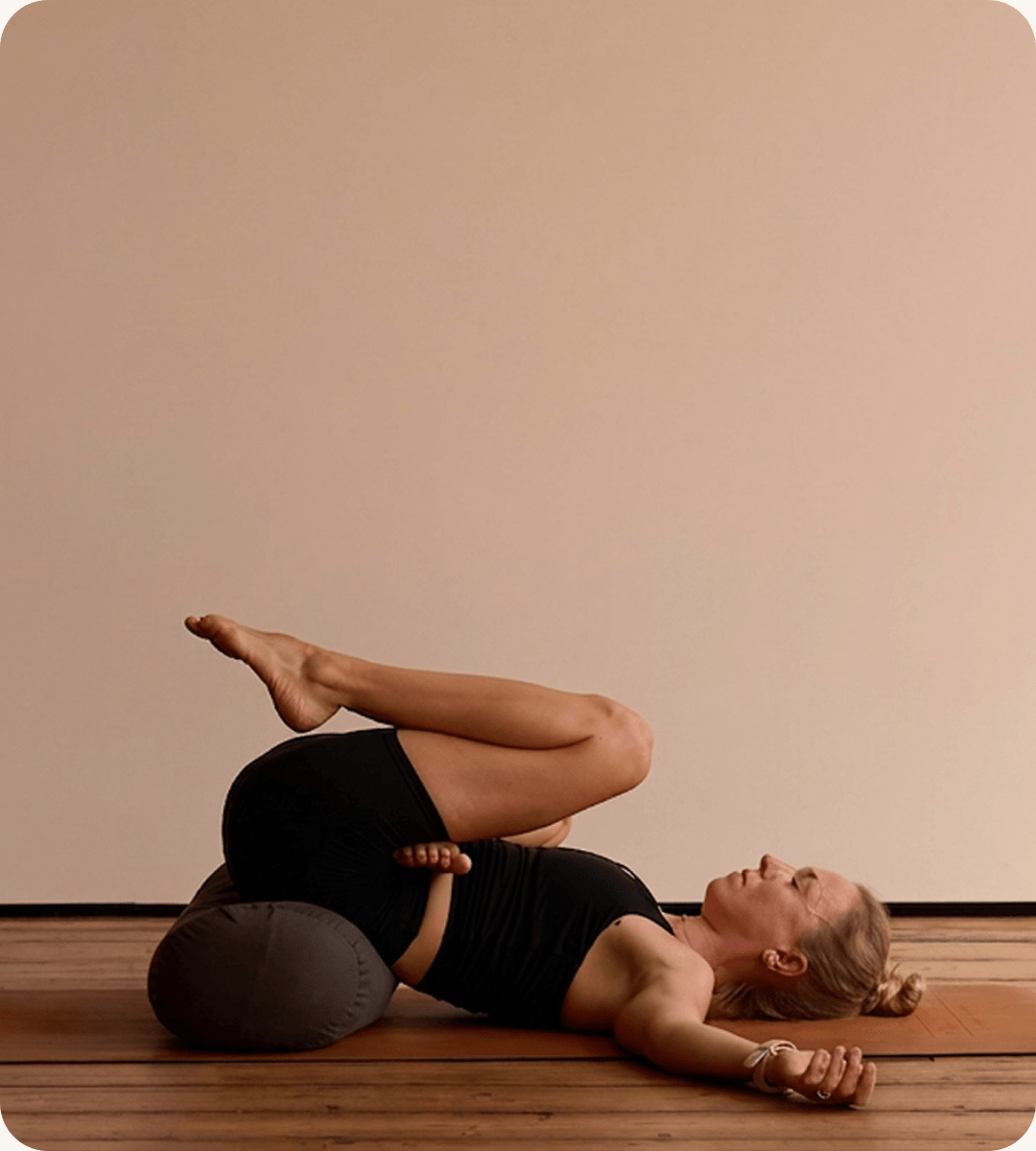
Somatics is all about becoming fluent in the language of our own bodies. Somatic Yin is a slow, floor-based yoga practice designed to gently stimulate the body’s fascial network while supporting nervous system regulation. Blending traditional yin postures with subtle somatic movement, this class works beyond muscles – targeting connective tissue, acupressure points, and meridian lines to encourage balanced energy flow and deep release.
In Somatic Yin we are approaching the body, nervous system, and fascial networks as a whole. Rather than looking at the outward shapes we can create, we use the shapes as a container to expand and unfurl, supported through a felt sense of safety within the nervous system. Where containers have firm boundaries to push against, they also have spaciousness to expand within and around.
Long-held, supported poses create therapeutic stress in the fascia, helping to improve hydration, elasticity, and mobility. Gentle micro-movements and guided awareness allow the nervous system to shift from “fight or flight” into rest-and-digest, promoting a felt sense of safety and calm. Rather than pushing into intensity, we emphasise on softening, sensing, and allowing. The result is a practice that nourishes connective tissue, settles the nervous system, and supports whole-body integration.
4. Why bring TCM, fascia work and nervous system theory into a Yin training specifically, rather than teaching them separately?
For me I don’t see them as separate, all of my work particularly within the realm of Somatics and Yoga is about the yoke, the union, the Yuj in Sanskrit. Realising that we were never separate, from ourselves, or each other and utilising these modalities to foster union, with ourselves and others as well.
5. What made you want to structure the course as two immersive weekends, with a week off in between, rather than one continuous block?
I think such a key part of our learning, particularly on such deep and expansive subjects, is the time for integration. A lot of the takeaways, personal discovery, and depth of information happens after the container when we have time to take the learnings into our own worlds, explore how they land in our own language, and feel in our bodies. The week off in between is for this: the space to take our time, still supported within the training, but discovering its depth in our own landscapes.
6. What do you hope teachers walk away being able to do differently in their own classes?
I hope this course gives teachers and students the depth of knowledge and confidence to hold space in their own language, in a way that feels authentic and expansive; to deepen their understanding of Yin beyond passive stretching and learn to teach with greater intelligence and intention.
7. Who is this training really for, and is there anyone you’d say it’s probably not right for?
This training is for anyone who is looking to delve deeper into Yin yoga, nervous system care, fascia and TCM. If you have been practicing or teaching for a while and you know there is so much more beneath the surface to access and you want to be able to guide yourself and your students there, this training is for you. You’re never going to be the perfect teacher for everyone, and I don’t think that’s something you should ever strive to be. I would always recommend coming to see me for a class at Yogarise – online or in person – or coming to a workshop to see if my teaching style resonates. I’m always happy to chat if anyone has any questions regarding whether this training is right for them.
8. What’s one thing you wish more yoga teachers understood about the nervous system?
Firstly, that it was never about regulating a simple stand alone system. It’s about capacity, connecting to our Soma self and embodying a baseline that feels safe for us so that we can expand our capacity and stretch our boundaries in all areas of our lives knowing we can always come back to that steady base. Secondly and perhaps more importantly how to hold space when a lot of the work needs to be done on the wider systems rather than individual nervous systems. Our nervous systems are brilliantly designed by default to respond to stimuli and keep us safe and often we can’t change the larger stimulus in place but we can hold brave and embodied spaces for people to be within.
9. For someone deciding between the single-day immersion and the full 50-hour training, what would you say to help them choose?
I think it really depends where you are at in your own journey – whether you’re a teacher already teaching Yin, looking to add some new tools and knowledge to your own toolkit; a teacher wanting to immerse yourself for a day or two, to be held in a container that will nourish you and top your cup up; a Yoga teacher looking to expand your capacity for space holding into teaching Yin yoga; or a student wanting to delve deeper into yourself. The training has been designed to be able to hold space for so many different choices and I’m always on hand if anyone has any questions as to which path is right for them on this course.
10.What can students expect from you as a teacher, going into this course?
One of the most trauma-informed things for me as a teacher is to admit that we’re all going to make mistakes sometimes, and there’s something so beautifully freeing in that. The space to explore what it really is to teach from an authentic and heartfelt place, to learn from each other in an open and expansive environment.
I serve as a mentor and guide for yoga teachers who want to embody and share the deeper philosophy of yoga with authenticity and skill. Yoga is more than movement – it’s a way of being. The true practice begins when we carry the principles of compassion, awareness, and liberation into every part of life. My work is devoted to helping teachers and students live and share yoga in its fullest form.
I guide yoga teachers, practitioners and students to live their practice fully – on the mat, in their communities, and in the world -so the wisdom of yoga can be a force for collective freedom.
Excited to find out more?
For two full weekends, in depth exploration, and a CPD accreditation – check out the full 50hr Somatic Yin Training.
For a more low-key experience of the practice – check out the 2hr Somatic Yin Workshop.